

A waterfront needs more than a beautiful view.
Seattle’s waterfront murals offer a starting point for thinking about the journey between arrival and attraction.

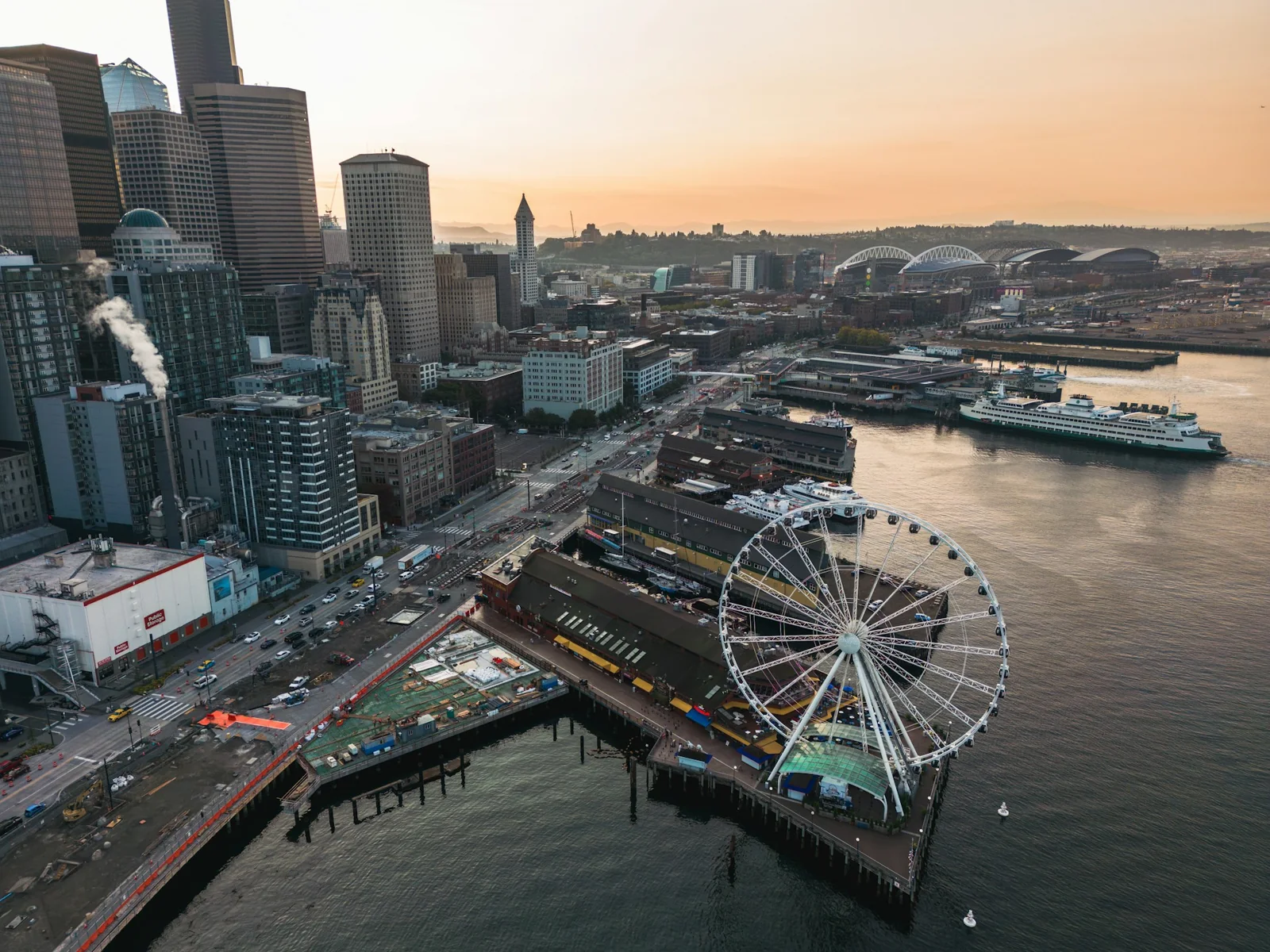
A visitor can arrive at a waterfront, admire the view and leave. Giving that person a reason to explore takes a different kind of planning.
The Port of Seattle’s October 13 story about Belltown’s murals offers an example. It describes a collection of more than 40 murals and a walking connection between Pier 66 and downtown, supported through partnerships involving artists, property owners and other organizations.
The Port’s story is about public art. For destination operators and waterfront owners, it also prompts a broader question: what helps a place become an experience people can understand, enjoy and move through?
Watch the Port’s linked “Jurassic Port” mural video on YouTube.
Give people a reason to keep exploring.
Our view: an attractive destination needs a legible invitation. A person arriving from a ferry, parking area or nearby street should be able to see where to go next and why it might be worthwhile.
That invitation can be a visible path, a useful sign, a place to sit, a food offering or something happening a short walk away. It can also be a sequence of smaller discoveries. The point is to make the next step feel natural to someone who has never been there before.
For a waterfront development, we would look beyond the main attraction. How does someone reach it? What happens between arrival and the destination? Can a family, a local resident and a visitor with limited time each find a satisfying way to use the place?
Plan for an ordinary day.
A launch event can bring people together. The experience on an ordinary afternoon depends on operating choices: opening hours, wayfinding, access, amenities, programming and maintenance.
These choices need owners. Who keeps information current? Who notices when a route is confusing or an amenity is unavailable? How do tenants and activity providers coordinate their schedules? A physical connection can lose its usefulness if the experience on either side does not line up.
Local relationships matter here, too. Artists, businesses and community organizations can help give a destination a character that belongs to its surroundings. Those relationships need a workable arrangement for participation and upkeep, as well as an appealing idea.
Walk the experience before adding another attraction.
For an existing site or a development in planning, we would start with a few practical questions:
- What is the first invitation? Stand at each arrival point and see whether the next destination is clear.
- Who can comfortably take part? Review the route and amenities with accessibility, different visit lengths and everyday needs in mind.
- What connects the pieces? Look at how paths, tenants, public spaces and activities support a coherent visit.
- Who owns the daily experience? Identify responsibilities for information, programming, cleaning, repairs and feedback.
Then decide what to observe. Visitor comments, route use, participation and recurring service issues can help a team learn what needs attention. A proposed improvement should have a clear purpose and a practical way to assess it.
The Seattle story does not demonstrate a particular increase in visitor spending or foot traffic, and we should not assume one. Its value is the planning question it opens: how can the spaces between the waterfront’s attractions become part of the reason people come?
Sources & context
Sources reviewed 23 October 2026. This article combines attributed reporting with Land & Sea’s perspective.