
The future of ferry service takes people willing to build it.
SWITCH Maritime’s latest hydrogen ferry milestone is a reminder that changing an industry takes more than a promising idea. It takes people with the ambition and persistence to bring it to life.

The future of maritime transportation is taking shape through projects that ask more of us. Different propulsion systems. New ways to supply energy. Better connections between the water and the communities around it.
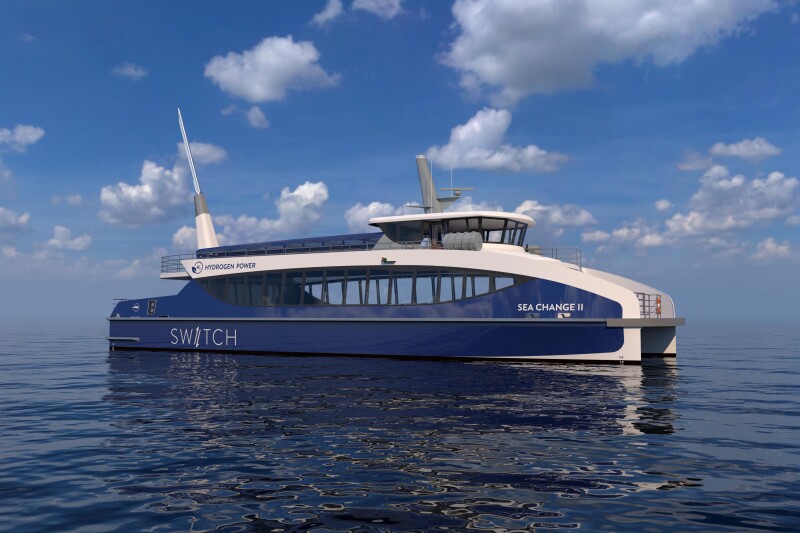
That’s what makes SWITCH Maritime’s work exciting to me. They’re pursuing a future in which hydrogen-powered ferries become a practical part of how people travel.
On October 21, WorkBoat reported that SWITCH secured a Coast Guard design basis agreement for its 150-passenger SWITCH-150 hydrogen fuel cell-electric ferry. The agreement establishes the regulatory framework for the vessel’s development. It’s an important step toward construction, commissioning and eventual operation, not a final authorization to carry passengers.
What I admire is the tenacity behind that progress.
I serve on SWITCH Maritime’s advisory board, and Land & Sea supports the company as a technical advisor, including its efforts to expand service. My perspective comes from that relationship, and we’re proud to work alongside this team.
Ambition matters. So does staying with it.
It’s easy to get excited about a new vessel concept. Staying committed through the engineering, regulatory questions and practical work of bringing it into service takes something more.
SWITCH has that grit.
Tenacity. Grit. High Ambition
Their ambition reaches beyond a single vessel. They’re working toward a different way to deliver ferry service, and that requires moving through questions that don’t always have an established answer.
Progress like this deserves recognition. Behind a design milestone are people doing the detailed work that makes a new idea possible.
Think about what this could open up.
When I look at a project like this, I think about the places it could connect.
A waterfront can be a destination, a workplace and a transportation link. Waterborne service can change how people reach those places and how communities use the water around them.
Hydrogen adds another possibility to that conversation. Whether it is the right fit will depend on the route, energy supply and operating requirements. But having more credible options gives owners and communities more room to imagine what their service could become.
That’s a future worth working toward.
The opportunity is to bring the vessel and the service plan forward together. A new propulsion system becomes much more meaningful when it supports a journey people want to make and a schedule they can depend on.
Build the service around the possibility.
Our involvement in SWITCH’s efforts to expand service keeps that connection close to the work.
The boat is central, but the experience extends well beyond it. People need to reach the landing, understand where they’re going and feel confident about the trip home. The team delivering the service needs the preparation and support to make that experience reliable.
I see those operating questions as part of innovation. They help turn an ambitious idea into something people can use.
Bringing operators into the conversation early can reveal opportunities as well as constraints. A different landing, a stronger connection to a destination or a better understanding of the working day can shape a more useful service.
Keep the ambition high.
There is more work ahead for the SWITCH-150. Its latest milestone should be understood for what it is, without getting ahead of the vessel’s development.
But we should also recognize what it represents: a team continuing to move an ambitious idea forward.
Maritime needs people prepared to do that. People who see a different future, commit to the difficult work and keep going.
That’s what I appreciate about SWITCH. Their ambition is high, and they have the tenacity to keep building toward it.
Sources & context
Sources reviewed 27 October 2026. This article combines attributed reporting with Land & Sea’s perspective.