

A new shipyard. What does it mean for your fleet?
HD Hyundai and Kiewit’s proposed U.S. shipyard is worth watching. For vessel owners, the useful questions start with fit, timing and the work needed before delivery.

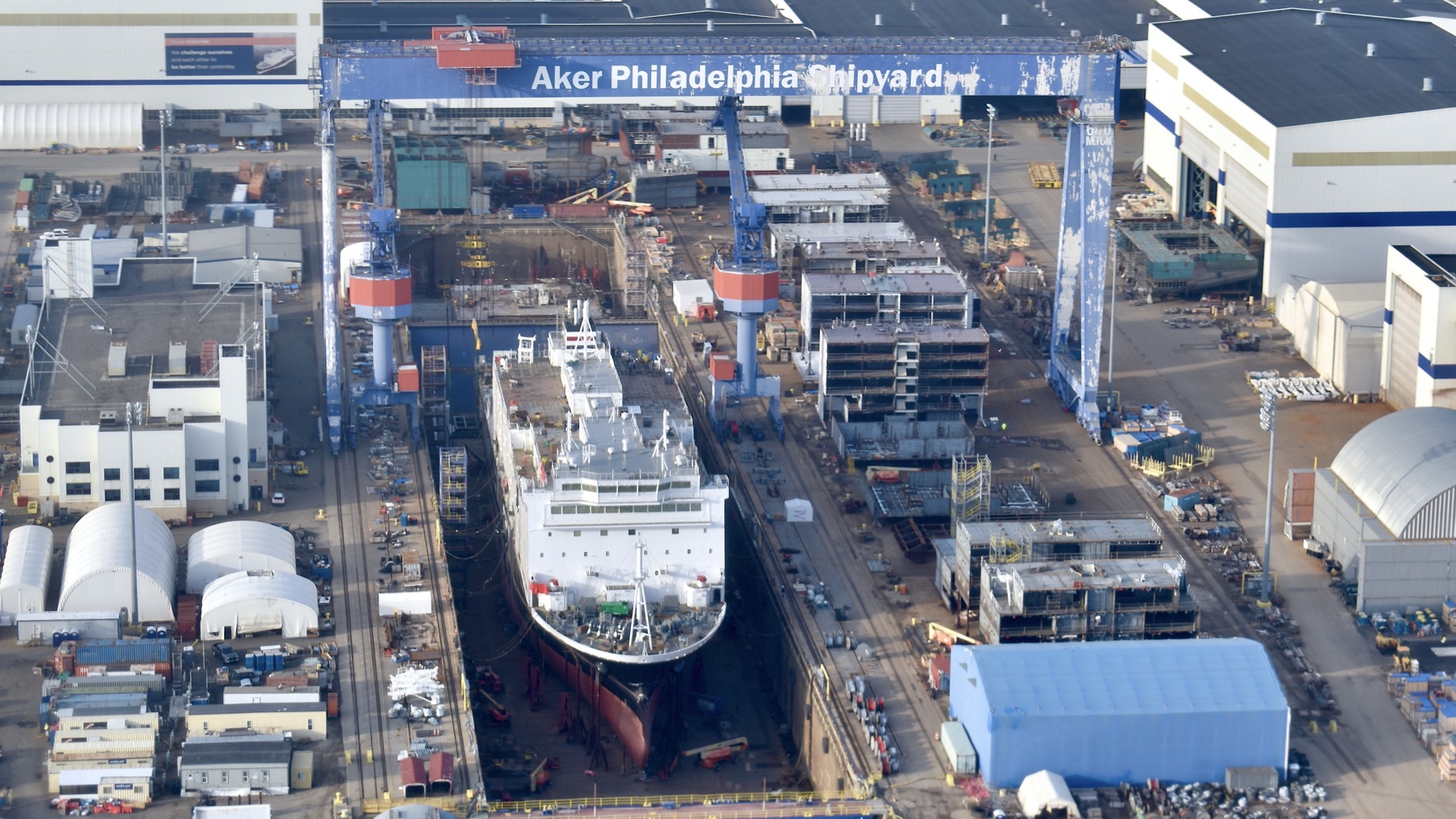
A new American shipyard is something to be encouraged by. If you're responsible for keeping vessels in service, though, the question quickly becomes more practical: what could it build, and when could that make a difference to your fleet?
On October 22, HD Hyundai and Kiewit announced plans for a joint venture to develop a purpose-built U.S. shipyard on an existing industrial site. Their stated targets are to begin construction in 2027 and reach full-scale operations in 2029. The proposed yard would pursue naval auxiliary and commercial vessel opportunities, along with ship blocks and modules.
The announcement brings together shipbuilding expertise and large-scale construction capability. That's a meaningful starting point. These are still plans and targets, though. An operator can't yet treat them as a confirmed delivery slot.
Start with the vessel you need
When we talk about shipbuilding capacity, it's easy to make it sound interchangeable. For an owner, the details are what make it useful.
A yard's facilities, production approach and suppliers need to fit the vessel you're trying to build. A passenger ferry and a naval auxiliary may both be commercial opportunities for a shipbuilder, but they create very different questions for the buyer.
Before a new yard belongs in a fleet plan, I'd want to understand the work it intends to take on and how that fits our requirements. That conversation should include the people who will operate and maintain the vessel. They can help identify decisions that look minor on a drawing but follow the crew for years.
The opening date is only part of the schedule
A facility can have an opening target while individual vessel schedules remain undecided. There is still a design to settle, equipment to order, a workforce to prepare and a delivery process to agree.
Kiewit and HD Hyundai describe plans for workforce development and advanced manufacturing, including digital twins and robotic welding. Those are worthwhile areas to watch. Their value to a vessel owner will become clearer as the proposed yard develops its capabilities and demonstrates what it can deliver.
For now, I would keep the announced milestones visible in long-range planning without making our service commitments depend on them. If an existing vessel needs replacement sooner, that need hasn't moved just because a promising announcement arrived.
A fleet plan needs room for new opportunities and a workable answer if they take longer.
Owners have preparation to do, too
There's work we can do while a project like this develops. We can get clearer about the vessel's actual working day, the conditions it will operate in and the maintenance support available when it comes home.
That means resolving questions early enough for a shipbuilder to price and plan the work properly. If we're still debating passenger capacity or how the vessel will load at our landing, a construction schedule alone won't give us certainty.
I'd also want the replacement plan connected to the current operation. What keeps running while the new vessel is built? How much flexibility is there if delivery shifts? Who is responsible for preparing the crew and the shoreside facilities?
Those conversations can be uncomfortable when everyone wants a firm date. They're easier before the operation has made promises around one.
Worth following as it becomes real
It's too early to judge the proposed yard's delivery performance. We can follow the milestones, learn which vessel types it will serve and watch how its workforce and supplier plans develop.
More capable shipbuilding options could give owners better choices. Getting there takes sustained work from builders, suppliers and buyers. The opportunity for operators is to arrive at that conversation prepared, with a clear understanding of the vessel and the service it needs to support.
Sources & context
- Kiewit: Proposed U.S. shipbuilding joint venture
2026-10-22 - Photo: MastersHall — maritime academy training ship at Philly Shipyard (February 2024)
Photographed February 26, 2024 - MARAD: National Security Multi-Mission Vessel program
Accessed October 26, 2026

Sources reviewed 26 October 2026. This article combines attributed reporting with Land & Sea’s perspective.