
America, this is doable. Let’s keep moving.
Incat and Buquebus have put an extraordinary electric ferry into service. We should celebrate what they’ve done and ask what we’re ready to build here.
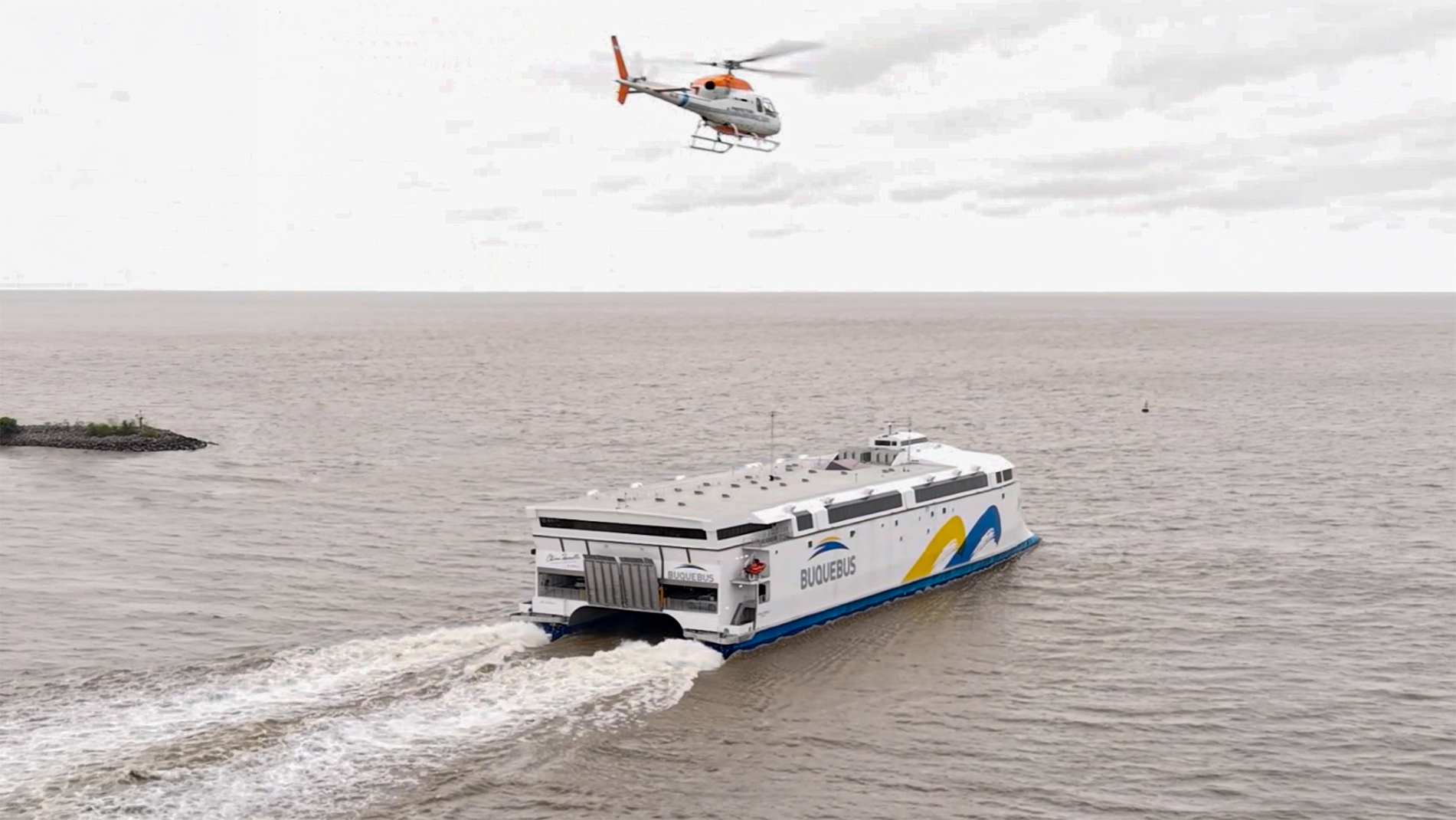
A 130-meter ferry built to carry up to 2,100 passengers is now crossing the Río de la Plata on batteries. For American maritime, the question is: what are we ready to build here?
I’ve operated Incat-designed vessels built in American yards in the late 1980s and early 1990s to meet Jones Act requirements. I know what those boats are capable of, and seeing China Zorrilla enter service means something to me.
Hats off to Robert Clifford and the entire Incat team, and to Juan Carlos López Mena and the Buquebus team for having the vision and conviction to take on a project like this.
Incat announced that the ferry completed its first commercial voyage between Buenos Aires and Colonia, following an October 21 launch ceremony in Buenos Aires. That’s a remarkable accomplishment. A lot of people put years of work into getting this boat on the water and into service. They deserve to be proud.
The technology is here
China Zorrilla was built to carry up to 2,100 passengers and 225 vehicles. Incat says the ship has more than 40 megawatt-hours of battery storage, powering eight electric waterjets.
A battery that size has to be charged from shore. That makes it a utility conversation as much as a shipyard conversation.
We don’t need to build the same boat for every route. A ferry in San Francisco Bay, New York, Los Angeles, Long Beach, Jacksonville, or any other waterway has its own needs. The service, the schedule, the power supply, and the economics all matter.
Incat and Buquebus have shown what’s possible when people commit to an idea and do the work to bring it to life.
That starts with getting the right people together early. The operator knows what the service needs to do. The shipyard knows what it takes to build the vessel. The utility needs to understand the power demand. The crew will be the ones running and maintaining it.
If those conversations happen too late, the project pays for it.
We need a better path to delivery
I want to thank the teams at the Port of Los Angeles and the Port of Long Beach. They’ve put a lot of work into supporting Harbor Breeze Cruises and the electrification work at West Harbor. I’m grateful for their support.
I’ve also seen how much it takes to get a project from an idea to the water.
At West Harbor LA, the project team has spent more than 24 months working through permitting and approvals to help bring new maritime infrastructure and services to the waterfront.
The people at the agencies have been doing their jobs within the rules they’ve been given. The question I keep coming back to is whether those rules give them enough room to help good projects move forward.
The private sector has a role here, too. The people developing, financing, and operating these projects see where the process works and where it gets difficult. We should bring that experience to the table.
Let’s get public agencies, operators, and policymakers talking earlier. Let’s look at the rules together and figure out where we can make the path clearer and more predictable.
We can protect our communities and the environment while helping good projects get built. I believe we can do both, and I’d like to see us get to work on it.
Pick a project and get to work
I’d like to see more American ferry owners, public agencies, shipbuilders, utilities, and investors sit down together and identify the next opportunity.
Start with a service that needs a better boat. Talk to the people who run it and the passengers who depend on it. Figure out what the route needs, what the shore infrastructure can support, and what it will take to fund and deliver the project.
Then put someone in charge and give the team what it needs to get moving.
For some routes, electric may be the right answer. For others, it may be hybrid, hydrogen, or another technology.
We’re even talking again about nuclear-powered vessels and floating power plants. That’s not new. The N.S. Savannah was launched in 1959, and the floating nuclear power plant Sturgis began supplying power in the Panama Canal Zone in 1968.
Let the operating needs and good engineering guide the decision. And let’s make sure our permitting agencies have the support and resources they need to evaluate these technologies and help move capable projects forward.
Let’s keep moving.
Congratulations again to Robert, Juan Carlos, and everyone at Incat and Buquebus who helped bring China Zorrilla into service.
I love seeing people take on something this ambitious and make it real. It takes belief, a lot of hard work, and a team that stays with it when the answers aren’t easy.
We have that talent here in America. We have operators, engineers, builders, crews, and public servants who can do extraordinary things.
If you run a ferry service, pick one route. Bring the operator, the shipyard, the utility, and the crew together, and put someone in charge.
America, this is doable. Let’s keep moving.
Sources & context
- Incat: Hull 096 enters commercial service
2026-10-26 - MARAD: N.S. Savannah history
2019 - U.S. Army Corps of Engineers: Sturgis historical report
2019-07 - Bloomberg: Inside a Giant Electric Ferry (video)
2026-10-26
Sources reviewed 29 October 2026. This article combines attributed reporting with Land & Sea’s perspective.